What Happens?

What happens when you take a piece of music that has been silent to most people for centuries…

…and bring it back to life?

I’ve been spending a long time with music written for instruments that most people today rarely hear — music filled with strange turns, unexpected harmonies, voices crossing and intertwining.

And the more I played it, the less it sounded like history.

It sounded alive.

There is a story here.

I’m beginning to tell it.

A few Days

Something has been waiting in the strings.

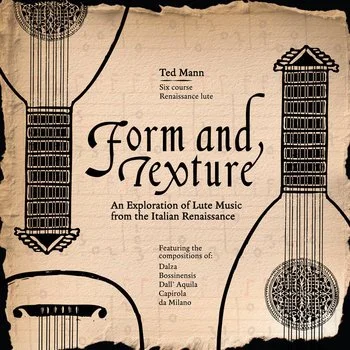
FORM AND TEXTURE: An Exploration of Lute Music from the Italian Renaissance

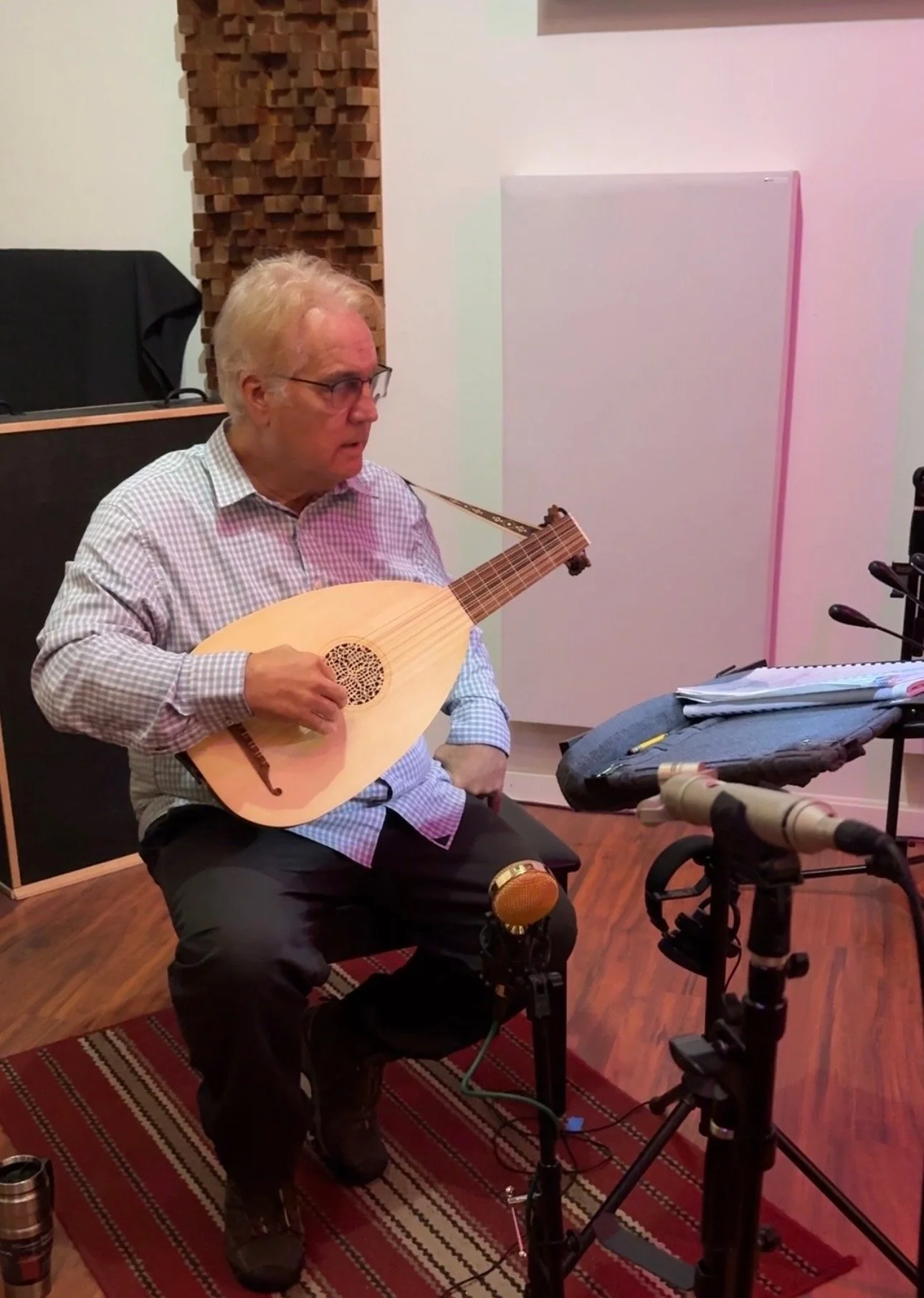
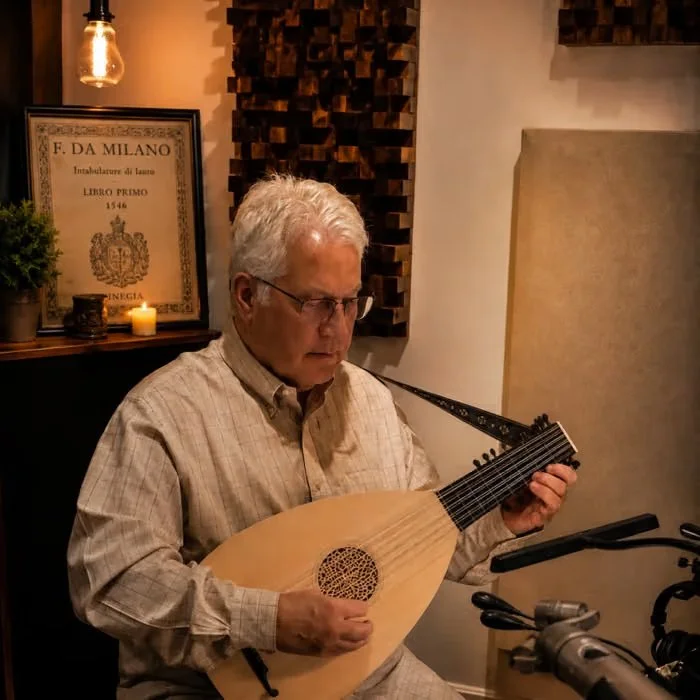
Ted Mann — lute.

Coming in just a few days.

If you'd like to hear it when it arrives, you can pre-save it on Spotify and Apple now:

What is going on here?


Search by clicking on the picture.

This is a double-sided single from the first of five albums. The first album in the series will be released later this month.

Presented here in a mono mix.

What else is going on here?

I am conducting a long intensive research project into the history of fretted stringed instruments and the long path leading to the modern guitar. Through an examination of music, instruments, and manuscripts across the centuries, I am exploring the important role these instruments—and the musicians who played them—had in the development of music itself, a role that has often been overlooked in music theory and history books

So anything else going on?

IN SEARCH OF…

TED MANN — LUTE

Two Renaissance composers.�Two extraordinary pieces.�One instrument.

SIDE A — VINCENZO CAPIROLA 1474–1548�Ricercar

SIDE B — FRANCESCO DA MILANO 1497–1543�Fantasia

Separated by a generation, Capirola and Milano explored what a single fretted instrument could make possible—voices within voices, intricate counterpoint, harmony, and musical invention.

The word ricercar means to search—and Capirola’s music seems to embody that search, taking a musical idea and following it wherever it leads.

Fantasia means imagination—and in Milano’s hands, the lute becomes a place where musical ideas can unfold freely, transform, and become something unexpected.

One searches.One imagines.

Five centuries later, I follow their trail.

Not simply to recreate the past.

But to listen and see for what may have been overlooked.

The manuscripts remain.The music remains.

The search continues. Click to search!

The Search

I am conducting an intensive research project into the early history of fretted instruments and their role in the development of music itself.

I am examining surviving instruments, manuscripts, tablatures, tunings, construction techniques, and the music written for them, looking for evidence of how musicians and composers experimented with musical ideas.

What I instinctively thought—and am increasingly finding—is that these instruments were not simply vehicles for music conceived elsewhere. They were places of experimentation: laboratories for harmony, counterpoint, harmonic movement, cadences, sequences, bass patterns, chordal structures, and more.

In some cases, the music seems to explore ideas that music theory would only later explain and formalize. The instrument and its repertoire appear to be leading the theory rather than simply following it.

Yet the role these instruments and the musicians who played them had in the development of music itself has largely been overlooked.

The evidence is there, often hiding in plain sight.

I am following it wherever it leads.

Meet my very good friend and mentor..

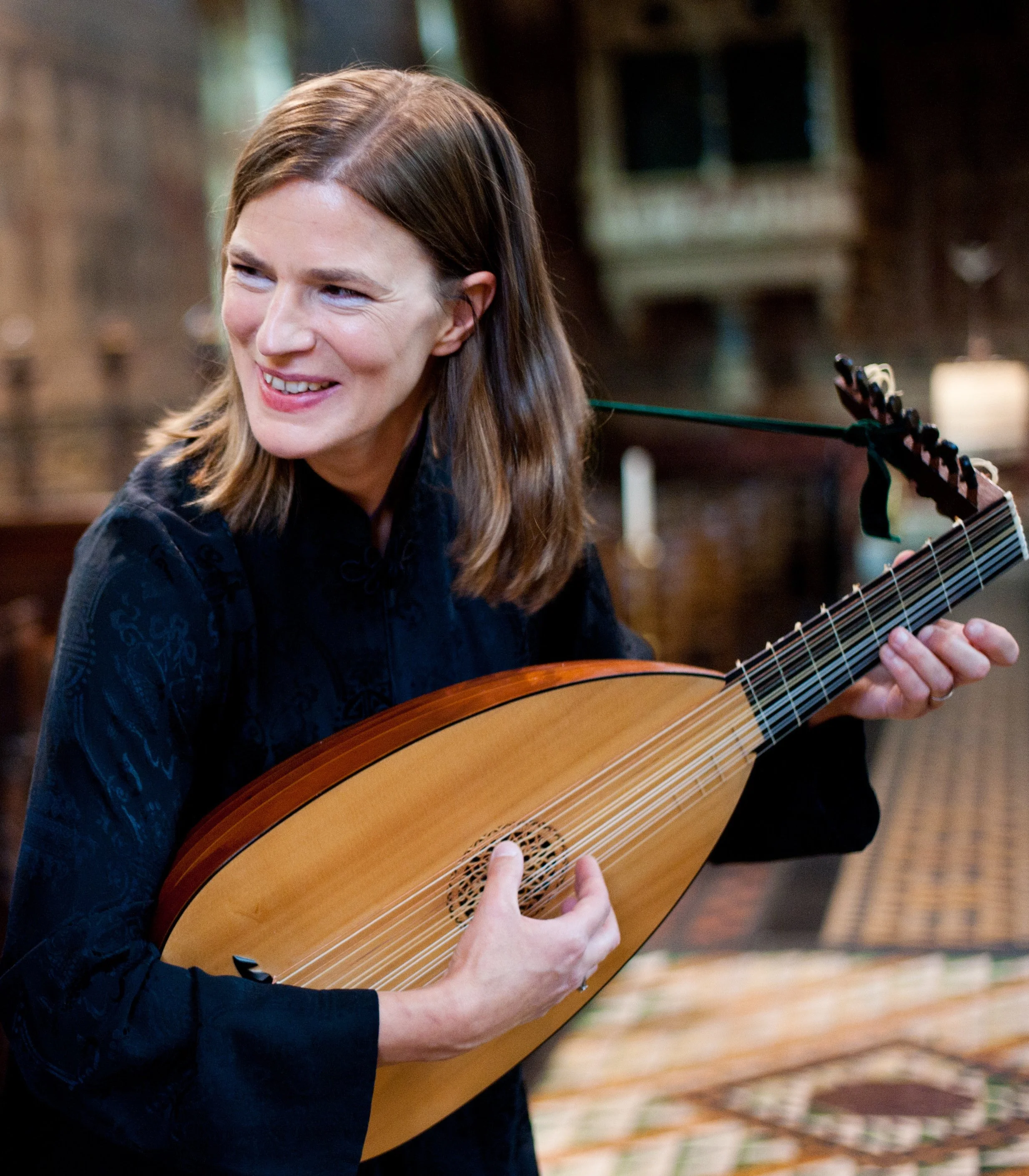
ELIZABETH PALLETT

There are musicians who play historical instruments.

And then there are musicians who seem to unlock them.

Elizabeth Pallett has become an expert guide and mentor in my own pursuit of understanding the early instruments that lie along the mysterious path to the modern guitar. Along the way, she has also become a truly great friend.

Her world is filled with instruments whose names, shapes, and sounds seem to have come from another time: the many forms of the lute, early guitars, and the extraordinary theorbo—a massive, long-necked member of the lute family whose deep voice once filled the musical spaces of another age.

Each instrument has its own secrets.

Its own construction.

Its own tuning.

Its own technique.

And most importantly—

its own voice.

Elizabeth understands these instruments not simply as artifacts preserved from the past, but as living instruments. She performs on them, studies their traditions, and explores the subtle differences in construction, tuning, technique, and sound that can reveal how musicians of earlier centuries actually made music.

And this is where the story takes us deeper into the past.

If you know anything about the lute, you have heard the name John Dowland.

Four hundred years ago, Dowland died.

But somehow, his music remained.

It crossed the centuries.

His melodies can be intimate and haunting, melancholy and strangely modern—as though a voice from another world has survived the passage of time, waiting for someone to hear it again.

This year marks the 400th anniversary of Dowland’s death. Musicians and scholars around the world have been marking the occasion with concerts, recordings, performances, scholarship, and explorations of the musical world in which Dowland lived and worked.

Elizabeth has taken us into that world in her own remarkable way.

Throughout this anniversary year, she has been releasing a series of video performances devoted to Dowland’s music, accompanied by video diaries that take us beyond the performances themselves.

They lead us into the places connected with Dowland and his contemporaries—the places where they lived, walked, worked, and performed—and then bring us forward again, following Elizabeth as she performs this music today in their footsteps.

The result is more than a series of performances.

It becomes a musical trail through time.

One place.

One instrument.

One piece of music.

One voice reaching across four centuries.

Fragments of a world that should be silent by now.

And yet, when the strings begin to vibrate, something happens.

For a moment, the distance between then and now seems to disappear.

The instruments cease to be historical objects.

They become voices.

Through Elizabeth’s lutes, early guitars, theorbo, and her performances of Dowland, we are given a chance to listen for something almost impossible to recover:

the sound of the past itself.

And perhaps that is what makes Elizabeth’s work so compelling.

She isn't simply playing old music.

She is following its trail.

Through instruments.

Through manuscripts.

Through places.

Through the music itself.

Searching for traces of something that time has almost erased.

Subscribe to her youtube channel here… you won’t be sorry!

The Beatles 60 years ago on April 4th

They came here 60 years ago....

But before they arrived they were featured on NBC news on Nov.18th 1963… Take a listen and hear a comment like this…. “One reason for the Beatles popularity is that it’s almost impossible to hear them…” and quite a few more comments that did not age well.

Beatles First Time on American TV

While in the planning stages to “invade” America Paul recalls… “I think one of the cheekiest things we ever did was to say to Brian Epstein, We’re not going to America until we’ve got a Number One record.”

“I Want to Hold Your Hand" became the group's first American number-one entering the charts on January 18,1964 at number 45. By February 1,1964 it was number 1.

And then, 60 Years ago today the Beatles touch down at JFK Airport at 1:20 PM to scenes never seen before and proceed to take over America.

The Beatles went on to become one the most popular and arguably most experimental bands of all time.They built bridges between “classical” (concert music) and popular music as well as other genres. 

Ambient November Single

A KIND OF BLUE MIST


This “double” single is from an unfinished album full ambient explorations. How does blue relate to sound or for that matter how does sound relate to blue? The “Soft Blue of Your Eyes” has been through several versions and this is the single version. It is for Lauren.

“Lost In A Blue Mist” could suggest getting lost while gazing in to soft blues eyes. The much longer EP version “I Lost You In a Blue Mist” can be found here. I used different guitars and keyboards to create these pieces.

Cruised out of September and into the heart of Fall.

On and on with my chill guitar series. We have cruised out of September and moved into October. Drive with me up and through the canyon in my ultra chill blue ‘57 Chevy convertible! It’s still warm enough to have the top down. Let the vibes from the sonic blue strat drive your car. The gas pedal is down, the sun is just to the right!

Cool cover art by Brian Murray.

Check it out click here!

Summer into Fall singles!

I’ve been working on my chill guitar series for about a year now. I’ve just released this “chill” single titled “A Warm but Chill September”. It evokes the subtle changes in the ambience in visuals and moods all around us. This is the soundtrack for your Pre- Fall activities. CHECK it OUT! Look for a new Fall piece by October.

"A Warm but Chill September"

At Loud Sun Studio .........

I spend a lot of time at Loud Sun Studio. I’m coming very close to a full 14 piece album in what I call my “chill” sessions. Here we are trying to figure out what a sweet desert mirage sounds like….


To hear what the sweet chill character of what the other tunes will be like go to/tedmann.bandcamp.com/ and checkout the EP Factoring the Chill.

Big.... Dumb.... Stupid Looking and Totally Beautiful!

Today, May 26th 1973 “Smoke on the Water” by Deep Purple made it’s way to the billboard charts.

“Possibly the simplest thing Ritchie Blackmore ever did is the most popular thing he ever did…. He wasted all this time playing wild guitar solos only to have 500,000 kids play that riff in their garage.It’s the ultimate rock riff:big dumb, stupid-looking and totally beautiful.” Buzz “King Buzzo” Osborne of the Melvins.

Ritchie Blackmore said it was an inversion of the iconic motif of Beethoven’s Fifth Symphony. That may be a joke.
"Smoke on the Water"

Allegri's Miserere Mei Deus

Miserere Mei Deus

This is the stunning "Miserere Mei Deus” (Psalm 51), composed by the Roman Catholic priest and Italian composer of the Roman School Gregorio Allegri (c. 1582 – 17 February 1652). It has seldom if ever been performed in a more sublime manner than by the London based vocal group,Voces8

The Miserere text is traditionally used for Holy Week during Tenebrae services.The well known story and the cry for mercy from King David’s words have reverberated through history.

The humility and yearning of this psalm is amplified in the back and forth of the the chant section with the homophonic and polyphonic textures presented in a double choir format.The ascent to the high C truly reaches to heaven. The subtle changes in stage position during the performance emphasizes the layers and changes of these textures in the prayer.

There are a lot of interesting stories surrounding this sublime piece. Some musicological and some enter a mythic realm. Knowing what a genius Mozart was this one always gets me. It has been said that 14-year old Wolfgang Amadeus Mozart arrived at the Vatican for Easter 1n 1770. He was in awe by St Peter’s, but perhaps unsurprisingly, the greatest impression was made on him by Gregorio Allegri’s (c. 1582 – 17 February 1652) stunning "Miserere Mei Deus”. The story is that this unpublished piece was only performed  during Holy Week in St. Peters. The precocious Mozart went home and wrote down from one hearing the whole composition from memory. There are more interesting events that led to how this composition evolved and came to be. (More on that in another post).