
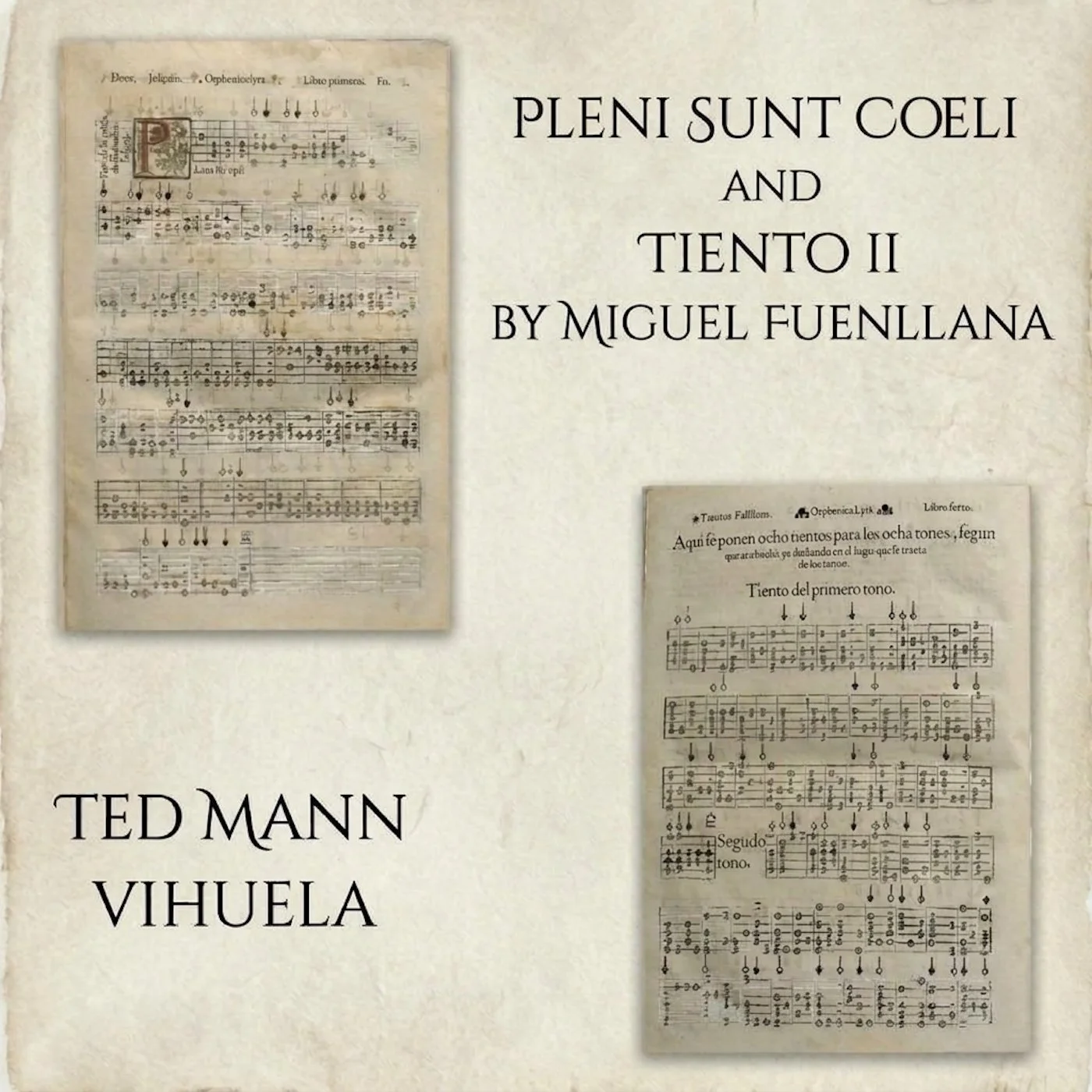
A new recording is now available, featuring two works by the Spanish vihuelist Miguel de Fuenllana, drawn from his remarkable collection Orphénica lyra, published in 1554.
The first piece, Pleni sunt coeli, is a duet based on the vocal polyphonic tradition. Here, music originally conceived for voices finds another life through the sound of the vihuela. The interweaving musical lines retain their independence, while taking on a new character through the instrument.
The second work, Tiento del segundo tono, takes us into a different musical world. The tiento offers a space for exploration, where musical ideas unfold through the particular possibilities of the vihuela.
But perhaps the most fascinating aspect of Fuenllana's work lies in his own account of how music was created.
In the prologue to Orphénica lyra, Fuenllana describes a process in which music was first played on the vihuela and only afterward committed to tablature.
This is a remarkable glimpse into the creative world of the sixteenth-century musician. The written page was not necessarily the beginning of the music. The instrument itself could be the place where musical ideas first took shape.
It is a small but revealing detail, one that invites us to reconsider the relationship between improvisation, composition, and the written musical tradition.
More than four centuries later, these pieces continue to offer a glimpse into that world.
The journey continues.