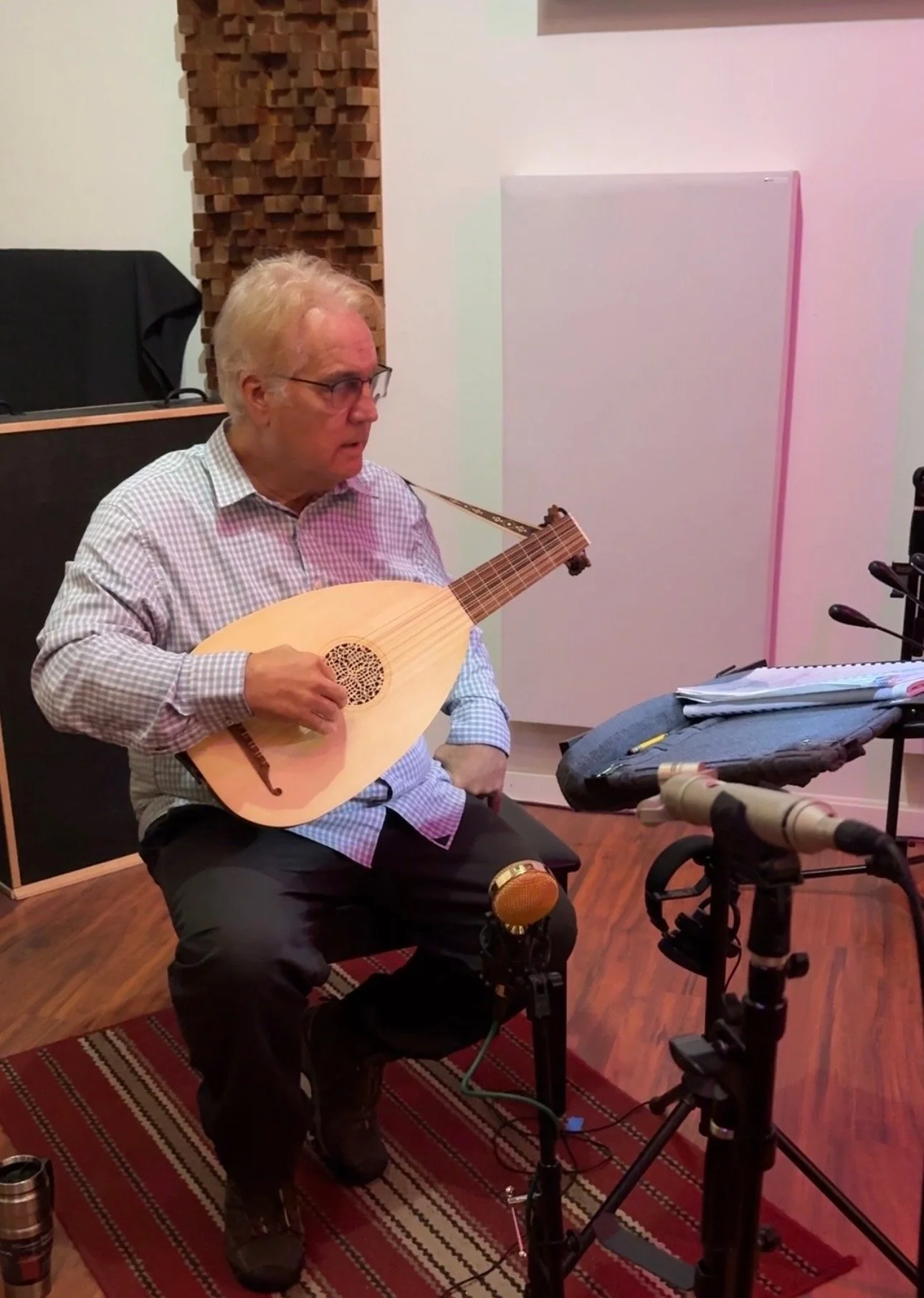
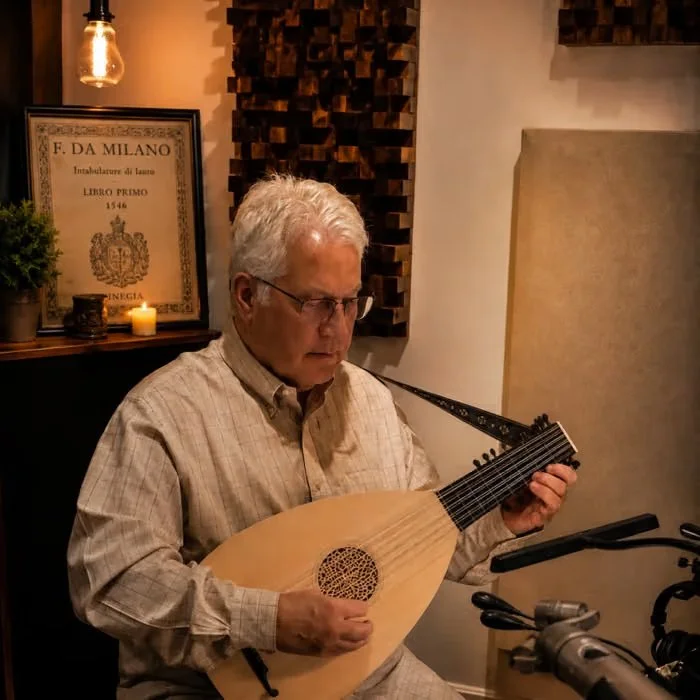
This is a double-sided single from the first of five albums. The first album in the series will be released later this month.
Presented here in a mono mix.
What else is going on here?
I am conducting a long intensive research project into the history of fretted stringed instruments and the long path leading to the modern guitar. Through an examination of music, instruments, and manuscripts across the centuries, I am exploring the important role these instruments—and the musicians who played them—had in the development of music itself, a role that has often been overlooked in music theory and history books
So anything else going on?
IN SEARCH OF…
TED MANN — LUTE
Two Renaissance composers.�Two extraordinary pieces.�One instrument.
SIDE A — VINCENZO CAPIROLA 1474–1548�Ricercar
SIDE B — FRANCESCO DA MILANO 1497–1543�Fantasia
Separated by a generation, Capirola and Milano explored what a single fretted instrument could make possible—voices within voices, intricate counterpoint, harmony, and musical invention.
The word ricercar means to search—and Capirola’s music seems to embody that search, taking a musical idea and following it wherever it leads.
Fantasia means imagination—and in Milano’s hands, the lute becomes a place where musical ideas can unfold freely, transform, and become something unexpected.
One searches.One imagines.
Five centuries later, I follow their trail.
Not simply to recreate the past.
But to listen and see for what may have been overlooked.
The manuscripts remain.The music remains.
The search continues. Click to search!